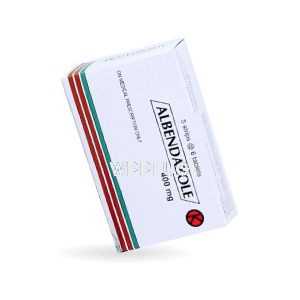
Albendazole is a broad-spectrum anthelmintic medication belonging to the benzimidazole class, widely used in both human and veterinary medicine for treating parasitic worm infections. Its significance in modern therapeutic regimens stems from its efficacy against a range of helminths, including nematodes, cestodes, and trematodes, making it a cornerstone in public health initiatives aimed at controlling neglected tropical diseases. This compound works by selectively binding to beta-tubulin in parasitic cells, inhibiting microtubule polymerization, which disrupts glucose uptake and leads to energy depletion and eventual death of the parasite.
Albenza, known generically as albendazole, is an anthelmintic medication belonging to the benzimidazole carbamate class. It’s formulated as an oral tablet, typically 200 mg or 400 mg, and functions as a broad-spectrum anti-parasitic agent. In clinical practice, it’s a cornerstone for treating various tissue and intestinal helminth infections, valued for its efficacy against larval and adult forms of susceptible parasites. The drug’s significance lies in its ability to manage conditions that are often neglected yet cause substantial morbidity in endemic regions and in specific patient populations, like those who are immunocompromised.
Praziquantel, the active pharmaceutical ingredient in Biltricide, represents one of those rare cases in pharmacotherapy where a single molecule completely transformed disease management. When I first encountered schistosomiasis cases during my tropical medicine rotation in the 1980s, we were still using older, less effective agents with significant toxicity profiles. The arrival of praziquantel changed everything - suddenly we had a broad-spectrum anthelmintic that was both highly effective and remarkably well-tolerated.
Iverheal represents one of those interesting cases where a generic formulation challenges established brand perceptions. When we first started seeing these ivermectin-based supplements appearing in clinical practice around 2018, there was significant skepticism among our gastroenterology team. The product essentially contains ivermectin as its active pharmaceutical ingredient, typically in 3mg, 6mg, or 12mg tablets, though the exact formulation varies by manufacturer. What’s fascinating is how it’s positioned - not as a prescription medication but as a dietary supplement, which creates this regulatory gray area that both patients and practitioners find confusing.
Stromectol, known generically as ivermectin, is an antiparasitic agent derived from the soil bacterium Streptomyces avermitilis. Initially developed for veterinary use, its remarkable efficacy and safety profile led to human applications, revolutionizing treatment for neglected tropical diseases like onchocerciasis and lymphatic filariasis. It’s available in oral tablet form and, in some regions, as a topical preparation. The World Health Organization includes it on its List of Essential Medicines, underscoring its global health importance.
Mebendazole, the active pharmaceutical ingredient in Vermox, represents one of the most established anthelmintic medications in clinical practice. As a benzimidazole derivative, it’s been our frontline defense against intestinal parasites for nearly five decades. What’s fascinating is how this compound continues to reveal new dimensions of its mechanism while remaining remarkably consistent in its clinical performance. I remember during my tropical medicine rotation in residency, we’d go through hundreds of doses monthly in endemic areas - the public health impact was staggering.
Product Description: A Ret Gel represents a significant advancement in topical retinoid therapy, combining stabilized tretinoin with enhanced penetration technology. This medical-grade formulation addresses the fundamental challenge of retinoid instability while maximizing bioavailability. The gel matrix creates a controlled-release environment that maintains tretinoin’s molecular integrity while minimizing the irritation commonly associated with traditional retinoid formulations. What sets this apart isn’t just the active ingredient—it’s the delivery system that makes the difference in clinical outcomes.
Product Description: Abana represents one of those interesting formulations that bridges traditional Ayurvedic wisdom with modern cardiovascular science. I first encountered it during my cardiology fellowship when our department was exploring integrative approaches to lipid management. The formula combines herbs like Terminalia arjuna, Withania somnifera, and Ocimum sanctum with minerals in a specific preparation that’s been used for decades, though Western literature has been slow to catch up. ## 1. Introduction: What is Abana?
Product Description Abhigra represents a novel class of phytopharmaceutical-grade dietary supplements derived from a standardized extract of Boswellia serrata, specifically optimized for enhanced bioavailability. Unlike conventional boswellia supplements, Abhigra utilizes a proprietary lipid-based delivery system that significantly increases the absorption of the active boswellic acids, particularly AKBA (3-O-acetyl-11-keto-β-boswellic acid). The formulation was developed through a collaboration between rheumatologists and pharmacognosy experts who recognized the limitations of existing anti-inflammatory supplements. We kept hitting the same wall with patients - they’d take standard boswellia products but achieve negligible serum levels.