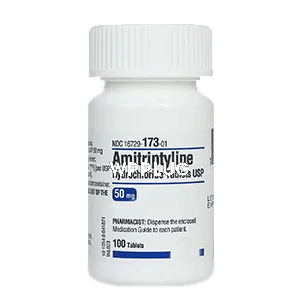
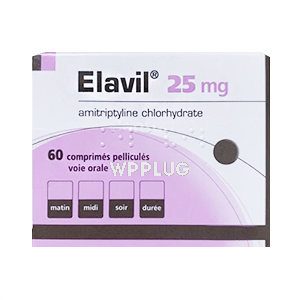
| Product dosage: 50mg | |||
|---|---|---|---|
| Package (num) | Per pill | Price | Buy |
| 90 | $0.46 | $41.05 (0%) | 🛒 Add to cart |
| 120 | $0.41 | $54.73 $49.06 (10%) | 🛒 Add to cart |
| 180 | $0.37 | $82.10 $66.08 (20%) | 🛒 Add to cart |
| 270 | $0.34 | $123.15 $91.11 (26%) | 🛒 Add to cart |
| 360 | $0.32
Best per pill | $164.20 $114.14 (30%) | 🛒 Add to cart |
Synonyms | |||

More info:
Amitriptyline: Multimodal Relief for Chronic Pain and Depression - Evidence-Based Review
Amitriptyline is a tricyclic antidepressant (TCA) that has been a cornerstone in psychiatric and pain management for decades. Originally developed in the 1960s, it remains widely prescribed off-label for numerous conditions due to its multifaceted pharmacological profile. While newer agents have emerged, amitriptyline’s unique combination of serotonin and norepinephrine reuptake inhibition, antihistaminic, and anticholinergic properties makes it particularly valuable for complex cases where first-line treatments fail. Its role has evolved from primary depression management to a versatile neuromodulator for chronic pain, migraine prophylaxis, and sleep regulation.
Diarex: Comprehensive Gut Microbiome Restoration for Chronic Diarrhea - Evidence-Based Review
Product Description: Diarex represents a novel approach to gastrointestinal support, specifically engineered for patients with chronic diarrhea and irritable bowel syndrome with diarrhea predominance (IBS-D). Unlike conventional antidiarrheals that merely slow intestinal transit, Diarex employs a multi-targeted strategy combining specific probiotic strains, prebiotic fibers, and mucosal protectants. We initially developed it after noticing how many patients in our clinic were cycling through loperamide and rifaximin without addressing the underlying dysbiosis. The product exists in a delayed-release capsule formulation to ensure targeted delivery to the small and large intestines.
elavil
Amitriptyline, marketed under the brand name Elavil among others, is a tricyclic antidepressant (TCA) with a long and complex history in clinical medicine. Initially developed and approved by the FDA in the early 1960s for the treatment of major depressive disorder, its utility has significantly expanded over the decades. It’s a dibenzocycloheptidine derivative, and its primary mechanism, which we’ll delve into, involves the potent inhibition of serotonin and norepinephrine reuptake in the central nervous system.
endep
Amitriptyline hydrochloride, marketed under the brand name Endep among others, is a tricyclic antidepressant (TCA) with a complex pharmacological profile that extends far beyond its original indication for major depressive disorder. First synthesized in the 1960s, it has become a cornerstone in the management of chronic neuropathic pain, migraine prophylaxis, and various off-label uses, cementing its place as a versatile therapeutic agent in neurology, psychiatry, and pain medicine. Its mechanism, primarily through the potent inhibition of serotonin and norepinephrine reuptake, alongside its anticholinergic and antihistaminic properties, creates a multifaceted tool for clinicians.
lyrica
Pregabalin, marketed under the brand name Lyrica among others, is a prescription medication structurally related to the inhibitory neurotransmitter gamma-aminobutyric acid (GABA). It’s classified as an anticonvulsant and anxiolytic drug, but its primary modern use has expanded significantly into the management of neuropathic pain conditions and fibromyalgia. It works by binding to the alpha2-delta subunit of voltage-gated calcium channels in the central nervous system, which ultimately reduces the release of several excitatory neurotransmitters.
pamelor
Pamelor, known generically as nortriptyline, is a tricyclic antidepressant (TCA) that’s been a workhorse in clinical psychiatry and neurology for decades. It’s primarily indicated for major depressive disorder but has carved out significant off-label roles in chronic pain management, migraine prophylaxis, and even certain anxiety disorders. What’s fascinating is how this older medication maintains relevance despite the SSRI revolution – its unique noradrenergic emphasis and active metabolite profile give it a different side effect and efficacy landscape that we still leverage in complex cases.
prothiaden
Prothiaden represents one of those older antidepressants that somehow keeps finding its way into modern practice despite all the newer agents available. It’s the brand name for dothiepin, a tricyclic antidepressant (TCA) that’s been around since the 1960s. What’s fascinating is how this medication persists in certain clinical niches when most practitioners have moved to SSRIs as first-line treatment. I still keep it in my arsenal for specific, complicated depression cases where the newer drugs fall short.
Sibelium: Effective Migraine Prophylaxis and Vestibular Symptom Management - Evidence-Based Review
Sibelium, known generically as flunarizine dihydrochloride, represents a fascinating class of calcium channel blocker specifically developed for neurological applications. It’s not your typical cardiovascular calcium antagonist; its unique pharmacological profile allows it to cross the blood-brain barrier effectively, making it a cornerstone in prophylactic migraine management and, in some regions, a valuable tool for vestibular disorders like vertigo. What’s compelling is its dual mechanism—it doesn’t just block calcium channels but also exhibits antihistaminic and dopaminergic activity, which explains its broader utility beyond simple vasodilation.
sinequan
Sinequan, known generically as doxepin, is a tricyclic antidepressant (TCA) that has been a cornerstone in psychopharmacology for decades. Initially approved for depression, its utility has expanded due to its potent antihistaminic properties, particularly at lower doses. It’s fascinating how a molecule from the 1960s continues to find new applications in modern medicine, especially in sleep medicine and dermatology. We initially thought of it as just another TCA, but its unique receptor affinity profile—especially the strong H1 and H2 histamine blockade—set it apart.