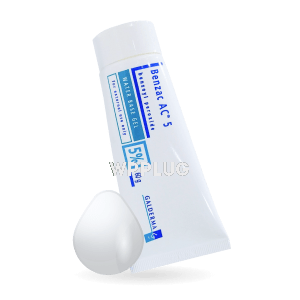
| Product dosage: 20g | |||
|---|---|---|---|
| Package (num) | Per tube | Price | Buy |
| 2 | $33.04 | $66.07 (0%) | 🛒 Add to cart |
| 3 | $29.03 | $99.11 $87.10 (12%) | 🛒 Add to cart |
| 4 | $26.03 | $132.15 $104.12 (21%) | 🛒 Add to cart |
| 5 | $23.03 | $165.19 $115.13 (30%) | 🛒 Add to cart |
| 6 | $20.02 | $198.22 $120.14 (39%) | 🛒 Add to cart |
| 7 | $18.59 | $231.26 $130.15 (44%) | 🛒 Add to cart |
| 8 | $17.64 | $264.30 $141.16 (47%) | 🛒 Add to cart |
| 9 | $16.57 | $297.34 $149.17 (50%) | 🛒 Add to cart |
| 10 | $15.22
Best per tube | $330.37 $152.17 (54%) | 🛒 Add to cart |
Synonyms | |||
Similar products
More info:
benzoyl
Benzoyl peroxide represents one of those foundational dermatologic agents that somehow manages to remain both profoundly effective and consistently misunderstood. When I first started in dermatology twenty-three years ago, we had this almost simplistic view of benzoyl peroxide - just throw it at inflammatory acne and wait for results. But over two decades of clinical practice has taught me the molecule’s fascinating complexities, from its oxygen-dependent bactericidal mechanism to its paradoxical irritation profile that actually teaches us valuable lessons about patient-specific skincare approaches.
a ret gel
Product Description: A Ret Gel represents a significant advancement in topical retinoid therapy, combining stabilized tretinoin with enhanced penetration technology. This medical-grade formulation addresses the fundamental challenge of retinoid instability while maximizing bioavailability. The gel matrix creates a controlled-release environment that maintains tretinoin’s molecular integrity while minimizing the irritation commonly associated with traditional retinoid formulations. What sets this apart isn’t just the active ingredient—it’s the delivery system that makes the difference in clinical outcomes.
benzac
Benzoyl peroxide 5% gel, a topical antimicrobial and comedolytic agent, represents one of the most thoroughly studied and clinically validated treatments for acne vulgaris. As a consultant dermatologist who’s prescribed this formulation for over fifteen years, I’ve watched it evolve from a first-line monotherapy to a cornerstone of combination regimens. The real breakthrough came when we stopped viewing it as just a “drying agent” and started appreciating its multifaceted mechanism against Cutibacterium acnes colonization and follicular hyperkeratinization.
Clindamycin: Potent Antibiotic for Anaerobic and Gram-Positive Infections - Evidence-Based Review
Clindamycin is a lincosamide antibiotic derived from lincomycin, first isolated from Streptomyces lincolnensis in the 1960s. It’s available in oral capsules, topical solutions/gels, vaginal creams/ovules, and injectable formulations. The drug works by binding to the 50S ribosomal subunit, inhibiting bacterial protein synthesis. We initially thought it was just another macrolide alternative, but its unique anaerobic coverage and bone penetration made it indispensable for certain infections. I remember our infectious disease team debating whether to include it in our hospital’s formulary back in 2010 - some argued resistance patterns were worsening, while others pointed to its irreplaceable role in treating aspiration pneumonia and pelvic infections.
dapsone
Dapsone, a sulfone antimicrobial agent, has been fascinating to work with over my 25 years in dermatology and infectious disease. I remember first encountering it during residency when we had a leprosy patient transferred from an endemic region - back then we still called it DDS (diaminodiphenyl sulfone), and the pharmacy had to specially compound it. What started as a niche antimycobacterial has evolved into one of our most versatile weapons against inflammatory dermatoses.
Differin: Clinically Proven Acne Treatment and Skin Renewal - Evidence-Based Review
Adapalene, marketed under the brand name Differin, represents a significant advancement in topical retinoid therapy, specifically formulated as a 0.1% gel, cream, or lotion for the treatment of acne vulgaris. Originally available only by prescription, its FDA approval for over-the-counter use in 2016 democratized access to a potent retinoid that modulates skin cell turnover and reduces inflammation. Unlike earlier retinoids, Differin offers a favorable balance between efficacy and tolerability, targeting multiple pathogenic factors in acne without the extreme irritation historically associated with vitamin A derivatives.
erythromycin
Erythromycin represents one of the foundational macrolide antibiotics in our antimicrobial arsenal, originally isolated from Streptomyces erythreus. This bacteriostatic agent has served as a critical tool against gram-positive organisms and some atypical pathogens since its introduction in 1952. What’s fascinating is how its role has evolved—from first-line therapy to a strategic alternative in penicillin-allergic patients, and now facing challenges with rising resistance patterns. In my infectious disease rotation back in ‘98, we still reached for erythromycin routinely for community-acquired pneumonia, but the landscape has shifted considerably since then.
haldol
Haloperidol, commonly known by its brand name Haldol, is a first-generation typical antipsychotic medication belonging to the butyrophenone class. It’s primarily used in the management of schizophrenia, acute psychotic episodes, Tourette’s syndrome, and severe behavioral problems in children. What’s fascinating about this molecule is its potent dopamine D2 receptor antagonism - honestly, it’s one of the most reliable antipsychotics we’ve had in our arsenal since the 1950s. The drug exists in multiple formulations including oral tablets, concentrate solutions, and intramuscular injections, with the decanoate ester formulation providing extended duration of action for maintenance therapy.
retin a 0025
Retin-A 0.025% represents a foundational strength of tretinoin, the gold-standard topical retinoid that’s been revolutionizing dermatologic care since the 1970s. This specific concentration—0.025%—occupies a unique therapeutic niche, balancing notable efficacy with enhanced tolerability, making it suitable for both initiation of retinoid therapy and long-term maintenance across various skin conditions. 1. Introduction: What is Retin-A 0.025%? Its Role in Modern Dermatology Retin-A 0.025% contains tretinoin, the acid form of vitamin A, formulated as a topical cream at 0.