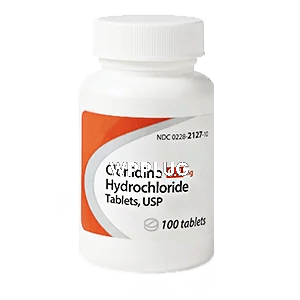
| Product dosage: 0.1mg | |||
|---|---|---|---|
| Package (num) | Per pill | Price | Buy |
| 10 | $4.00 | $40.05 (0%) | 🛒 Add to cart |
| 20 | $2.25 | $80.09 $45.05 (44%) | 🛒 Add to cart |
| 30 | $1.67 | $120.14 $50.06 (58%) | 🛒 Add to cart |
| 90 | $0.67 | $360.42 $60.07 (83%) | 🛒 Add to cart |
| 120 | $0.54 | $480.57 $65.08 (86%) | 🛒 Add to cart |
| 180 | $0.39 | $720.85 $70.08 (90%) | 🛒 Add to cart |
| 270 | $0.30 | $1081.27 $80.09 (93%) | 🛒 Add to cart |
| 360 | $0.26
Best per pill | $1441.70 $95.11 (93%) | 🛒 Add to cart |
Synonyms
| |||
More info:
clonidine
Clonidine is a centrally acting alpha-2 adrenergic agonist that’s been in clinical use for decades, originally developed as a nasal decongestant before we discovered its profound cardiovascular effects. It’s fascinating how this medication has evolved - we now use it for everything from hypertension to ADHD to opioid withdrawal, and recently there’s been growing off-label use for anxiety and sleep disorders. The way it modulates sympathetic outflow from the brainstem is really quite elegant when you think about it.
alphagan
Brimonidine tartrate ophthalmic solution 0.15% - that’s what we’re really talking about when we discuss Alphagan. It’s fascinating how brand names stick while the actual pharmacology gets lost in translation. I remember when this first hit our formulary committee back in 2001 - the heated debates about whether we needed another alpha-2 agonist when we already had apraclonidine gathering dust in our cabinets. Alphagan: Effective Intraocular Pressure Reduction for Glaucoma Management - Evidence-Based Review 1.
betoptic
Betoptic, known generically as betaxolol hydrochloride, is a selective beta-1 adrenergic receptor blocking agent formulated specifically as an ophthalmic solution. It belongs to the class of cardioselective beta-blockers and is indicated primarily for lowering elevated intraocular pressure (IOP) in patients with chronic open-angle glaucoma or ocular hypertension. Unlike non-selective beta-blockers, Betoptic offers a favorable safety profile concerning pulmonary and cardiovascular parameters due to its relative selectivity, making it a cornerstone in glaucoma management for patients with concurrent asthma or COPD.
Combipres: Effective Dual-Mechanism Hypertension Control - Evidence-Based Review
Combipres represents one of those interesting cases where a combination product actually makes pharmacological sense, unlike so many others that just throw ingredients together. It’s a fixed-dose combination tablet containing clonidine hydrochloride and chlorthalidone, primarily indicated for hypertension management. The rationale behind pairing these two specific agents—a central alpha-2 adrenergic agonist with a thiazide-like diuretic—creates a complementary mechanism that’s stood the test of time in cardiovascular medicine. 1. Introduction: What is Combipres?
inderal
Propranolol hydrochloride - that’s the chemical name that started it all for us back in the 1960s. I remember pulling the original Imperial Chemical Industries monograph from our medical library archives, the pages brittle and smelling of old paper. We called it “the breakthrough that blocked too much” initially because the side effect profile seemed daunting. But here we are decades later, and Inderal remains one of the most prescribed beta-blockers worldwide despite all the newer agents that have come along.
innopran xl
Propranolol hydrochloride extended-release capsules - that’s the official designation for what most of us just call Innopran XL in clinical practice. It’s one of those workhorse beta-blockers that’s been around long enough that we sometimes forget how elegantly it solves certain cardiovascular problems. The extended-release formulation specifically addresses the troughs in plasma concentration that made the immediate-release version such a pain for compliance. Innopran XL: Consistent 24-Hour Blood Pressure Control - Evidence-Based Review 1.
pamelor
Pamelor, known generically as nortriptyline, is a tricyclic antidepressant (TCA) that’s been a workhorse in clinical psychiatry and neurology for decades. It’s primarily indicated for major depressive disorder but has carved out significant off-label roles in chronic pain management, migraine prophylaxis, and even certain anxiety disorders. What’s fascinating is how this older medication maintains relevance despite the SSRI revolution – its unique noradrenergic emphasis and active metabolite profile give it a different side effect and efficacy landscape that we still leverage in complex cases.
prazosin
Prazosin hydrochloride is an alpha-1 adrenergic receptor antagonist that’s been around since the 1970s, originally developed as an antihypertensive agent. What’s fascinating is how its applications have expanded far beyond cardiovascular medicine into areas we never initially anticipated. I keep both 1mg and 2mg tablets in my clinic for off-label uses that have become more valuable than its original indication. Prazosin: Effective Nightmare and PTSD Symptom Management - Evidence-Based Review 1.
propranolol
Propranolol hydrochloride - that little white 10mg tablet that’s been in my pocket for fifteen years. Funny how something so small can carry so much weight. I remember my first month prescribing it back in ‘08, being simultaneously impressed and terrified by its effects. We had this construction worker, mid-40s, who came in with essential tremor so bad he couldn’t hold a coffee cup steady. Two weeks on propranolol 20mg twice daily, and he’s back operating heavy machinery.