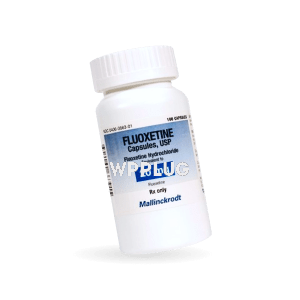

| Product dosage: 10mg | |||
|---|---|---|---|
| Package (num) | Per cap | Price | Buy |
| 180 | $0.34 | $62.07 (0%) | 🛒 Add to cart |
| 360 | $0.31
Best per cap | $124.15 $111.13 (10%) | 🛒 Add to cart |
| Product dosage: 20mg | |||
|---|---|---|---|
| Package (num) | Per cap | Price | Buy |
| 60 | $0.67 | $40.05 (0%) | 🛒 Add to cart |
| 90 | $0.60 | $60.07 $54.06 (10%) | 🛒 Add to cart |
| 120 | $0.56 | $80.09 $67.08 (16%) | 🛒 Add to cart |
| 180 | $0.53 | $120.14 $95.11 (21%) | 🛒 Add to cart |
| 270 | $0.51 | $180.21 $137.16 (24%) | 🛒 Add to cart |
| 360 | $0.50
Best per cap | $240.28 $179.21 (25%) | 🛒 Add to cart |
Synonyms
| |||
Similar products
More info:
Fluoxetine: Evidence-Based Treatment for Depression and Beyond - Comprehensive Review
Fluoxetine hydrochloride is a selective serotonin reuptake inhibitor (SSRI) antidepressant available in oral formulations including capsules, tablets, and liquid solution. Marketed under brand names like Prozac and Sarafem, this compound has been a cornerstone in psychopharmacology since its 1987 FDA approval. What’s fascinating about fluoxetine isn’t just its chemical structure - it’s how this molecule fundamentally changed our approach to depression treatment and beyond. Unlike earlier antidepressants that came with significant side effect burdens, fluoxetine offered a different tolerability profile that made outpatient management more feasible.
abilify
Aripiprazole, marketed under the brand name Abilify, represents a significant advancement in the atypical antipsychotic class with its unique pharmacodynamic profile. This second-generation antipsychotic functions as a partial dopamine D2 and serotonin 5-HT1A receptor agonist while simultaneously acting as a 5-HT2A receptor antagonist. The clinical implications of this mechanism are profound, offering stabilization of dopamine neurotransmission rather than complete blockade, which translates to improved tolerability regarding extrapyramidal symptoms and prolactin elevation compared to conventional antipsychotics.
Amitriptyline: Multimodal Relief for Chronic Pain and Depression - Evidence-Based Review
Amitriptyline is a tricyclic antidepressant (TCA) that has been a cornerstone in psychiatric and pain management for decades. Originally developed in the 1960s, it remains widely prescribed off-label for numerous conditions due to its multifaceted pharmacological profile. While newer agents have emerged, amitriptyline’s unique combination of serotonin and norepinephrine reuptake inhibition, antihistaminic, and anticholinergic properties makes it particularly valuable for complex cases where first-line treatments fail. Its role has evolved from primary depression management to a versatile neuromodulator for chronic pain, migraine prophylaxis, and sleep regulation.
Anafranil: Effective Symptom Control for Obsessive-Compulsive Disorder - Evidence-Based Review
Anafranil, known generically as clomipramine hydrochloride, is a tricyclic antidepressant (TCA) belonging to the dibenzazepine class. It functions primarily as a potent serotonin reuptake inhibitor, though it also affects norepinephrine reuptake to a lesser extent. Marketed extensively for the treatment of obsessive-compulsive disorder (OCD), its application extends to major depressive disorder, panic disorder, and certain chronic pain conditions. The drug is available in oral formulations, typically as 10 mg, 25 mg, and 50 mg capsules or tablets, designed for systemic absorption and central nervous system activity.
bystolic
Bystolic represents one of those interesting beta-blockers that never quite got the mainstream attention it deserved, which is a shame because in my cardiology practice, I’ve found it to be remarkably versatile. It’s not just another blood pressure medication—the way it selectively targets beta-1 receptors while leaving beta-2 mostly alone creates a different side effect profile that many patients tolerate better than traditional beta-blockers like metoprolol or atenolol. When I first started prescribing it back in 2008, I’ll admit I was skeptical about whether this “cardioselective” claim would hold up in real patients, not just clinical trials.
Celexa: Effective Depression Management and Mood Stabilization - Evidence-Based Review
Celexa, known generically as citalopram hydrobromide, is a selective serotonin reuptake inhibitor (SSRI) antidepressant medication, not a dietary supplement or medical device. It’s FDA-approved for the treatment of major depressive disorder (MDD) in adults. As an SSRI, it works by increasing serotonin levels in the brain, which helps improve mood, sleep, appetite, and energy level. It’s crucial to understand that Celexa is a prescription drug with potential side effects and risks, including a black box warning for increased suicidal thoughts and behaviors in children, adolescents, and young adults.
coreg
Coreg, known generically as carvedilol, represents a significant advancement in cardiovascular pharmacotherapy. It’s a non-selective beta-blocker with additional alpha-1 blocking activity, which fundamentally distinguishes it from older beta-blockers. In clinical practice, we use it primarily for heart failure with reduced ejection fraction (HFrEF), hypertension, and post-myocardial infarction management when left ventricular dysfunction is present. Its unique dual mechanism allows for more comprehensive neurohormonal blockade, which translates directly into mortality benefits we simply didn’t see with earlier generations of beta-blockers.
desyrel
Trazodone hydrochloride, marketed under the brand name Desyrel among others, represents one of those interesting psychotropic agents that defies simple classification. Initially developed in the 1960s by Angelini Research Laboratories as a potential antidepressant, it entered clinical practice with a unique pharmacological profile that set it apart from both classic tricyclics and the newer SSRIs that would follow. What’s fascinating isn’t just its primary indication for major depressive disorder, but how its off-label applications—particularly for insomnia—have arguably become its most common use in contemporary practice.
effexor xr
Effexor XR (venlafaxine extended-release) represents a significant advancement in the pharmacological management of major depressive disorder and anxiety disorders. As a serotonin-norepinephrine reuptake inhibitor (SNRI), it occupies a distinct position between selective serotonin reuptake inhibitors (SSRIs) and older tricyclic antidepressants. The extended-release formulation was specifically engineered to mitigate the peak-trough plasma concentration fluctuations associated with immediate-release venlafaxine, thereby enhancing tolerability and adherence. In clinical practice, we’ve observed it’s particularly valuable for patients with treatment-resistant depression or those experiencing significant fatigue and anhedonia as predominant symptoms.