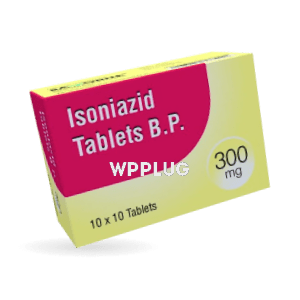
| Product dosage: 300mg | |||
|---|---|---|---|
| Package (num) | Per pill | Price | Buy |
| 90 | $0.50 | $45.05 (0%) | 🛒 Add to cart |
| 120 | $0.46 | $60.07 $55.07 (8%) | 🛒 Add to cart |
| 180 | $0.42 | $90.11 $75.09 (17%) | 🛒 Add to cart |
| 270 | $0.39 | $135.16 $106.13 (21%) | 🛒 Add to cart |
| 360 | $0.38
Best per pill | $180.21 $136.16 (24%) | 🛒 Add to cart |
Synonyms
| |||
More info:
isoniazid
Isoniazid remains one of those foundational tuberculosis drugs that somehow never gets the spotlight it deserves, yet it’s saved more lives than most newer, flashier medications. When I first started in pulmonary medicine back in the late 90s, we had this 65-year-old patient, Mr. Henderson, who’d been on the standard four-drug regimen for active TB. After two months, we dropped to just isoniazid and rifampin for the continuation phase. His sputum cultures had cleared beautifully, but then his liver enzymes started creeping up around week 12.
Dilantin: Effective Seizure Control and Neural Stabilization - Evidence-Based Review
Phenytoin, known widely by its brand name Dilantin, is one of those foundational antiepileptic drugs (AEDs) that every neurologist and even seasoned ER docs have a deep, almost personal, relationship with. It’s a hydantoin derivative, a class of medication whose primary mechanism revolves around stabilizing neuronal membranes and limiting the spread of seizure activity. For decades, it’s been a first-line agent for focal and generalized tonic-clonic seizures. Its role has evolved, especially with newer agents on the market, but you still can’t beat its efficacy and rapid onset when you need it, particularly in status epilepticus.
myambutol
Ethambutol hydrochloride, commonly known by its brand name Myambutol, represents one of the cornerstone first-line agents in modern tuberculosis management protocols. As a synthetic bacteriostatic antimycobacterial agent, its primary mechanism involves targeted inhibition of arabinosyltransferase enzymes critical for mycobacterial cell wall synthesis. The drug’s unique specificity for mycobacterial species, particularly Mycobacterium tuberculosis complex organisms, provides clinicians with a powerful tool that demonstrates minimal cross-resistance with other anti-TB medications. What continues to impress me after twenty-three years of pulmonary practice isn’t just the biochemical elegance of its action, but how this relatively simple molecule has maintained such consistent clinical utility despite the emergence of numerous newer antimicrobial classes.
Trecator SC: Effective Second-Line Tuberculosis Treatment - Evidence-Based Review
Trecator SC represents one of those older antimicrobials that somehow keeps finding its place in our therapeutic arsenal despite all the newer agents. It’s ethionamide, plain and simple - an antibiotic specifically designed for tuberculosis, particularly the multidrug-resistant strains that give us so much trouble. What’s fascinating is how this 60-year-old drug continues to be relevant when we’re dealing with TB that’s resistant to our first-line agents. 1. Introduction: What is Trecator SC?
tylenol
Acetaminophen, known widely by its brand name Tylenol, represents one of the most utilized over-the-counter (OTC) analgesic and antipyretic agents globally. As a senior clinician with over two decades in emergency and internal medicine, I’ve witnessed its evolution from a simple pain reliever to a medication requiring careful clinical consideration. The journey of acetaminophen in modern therapeutics is fascinating—initially developed as an alternative to phenacetin, it has become a household staple, yet its mechanism remained partially enigmatic until relatively recent research illuminated its central COX inhibition properties.
a ret gel
Product Description: A Ret Gel represents a significant advancement in topical retinoid therapy, combining stabilized tretinoin with enhanced penetration technology. This medical-grade formulation addresses the fundamental challenge of retinoid instability while maximizing bioavailability. The gel matrix creates a controlled-release environment that maintains tretinoin’s molecular integrity while minimizing the irritation commonly associated with traditional retinoid formulations. What sets this apart isn’t just the active ingredient—it’s the delivery system that makes the difference in clinical outcomes.
abana
Product Description: Abana represents one of those interesting formulations that bridges traditional Ayurvedic wisdom with modern cardiovascular science. I first encountered it during my cardiology fellowship when our department was exploring integrative approaches to lipid management. The formula combines herbs like Terminalia arjuna, Withania somnifera, and Ocimum sanctum with minerals in a specific preparation that’s been used for decades, though Western literature has been slow to catch up. ## 1. Introduction: What is Abana?
abhigra
Product Description Abhigra represents a novel class of phytopharmaceutical-grade dietary supplements derived from a standardized extract of Boswellia serrata, specifically optimized for enhanced bioavailability. Unlike conventional boswellia supplements, Abhigra utilizes a proprietary lipid-based delivery system that significantly increases the absorption of the active boswellic acids, particularly AKBA (3-O-acetyl-11-keto-β-boswellic acid). The formulation was developed through a collaboration between rheumatologists and pharmacognosy experts who recognized the limitations of existing anti-inflammatory supplements. We kept hitting the same wall with patients - they’d take standard boswellia products but achieve negligible serum levels.
abilify
Aripiprazole, marketed under the brand name Abilify, represents a significant advancement in the atypical antipsychotic class with its unique pharmacodynamic profile. This second-generation antipsychotic functions as a partial dopamine D2 and serotonin 5-HT1A receptor agonist while simultaneously acting as a 5-HT2A receptor antagonist. The clinical implications of this mechanism are profound, offering stabilization of dopamine neurotransmission rather than complete blockade, which translates to improved tolerability regarding extrapyramidal symptoms and prolactin elevation compared to conventional antipsychotics.